Archive for the ‘2006 Elections’ Category

Bob Woodward can probably forget about waiting for the invitation to the White House Christmas party to arrive in the mail this year.

From the New York Daily News:

The CIA’S top counterterrorism officials felt they could have killed Osama Bin Laden in the months before 9/11, but got the “brushoff” when they went to the Bush White House seeking the money and authorization.

CIA Director George Tenet and his counterterrorism head Cofer Black sought an urgent meeting with then-national security adviser Condoleezza Rice on July 10, 2001, writes Bob Woodward in his new book “State of Denial.”

They went over top-secret intelligence pointing to an impending attack and “sounded the loudest warning” to the White House of a likely attack on the U.S. by Bin Laden.

Woodward writes that Rice was polite, but, “They felt the brushoff.”

Tenet and Black were both frustrated.

Black later calculated that all he needed was $500 million of covert action funds and reasonable authorization from President Bush to go kill Bin Laden and “he might be able to bring Bin Laden’s head back in a box,” Woodward writes.

Black claims the CIA had about “100 sources and subsources” in Afghanistan who could have helped carry out the hit.

The details of the incident are emerging just days after Sen. Hillary Clinton and former President Bill Clinton sparred with Rice over whether the Bush administration had tried to get Bin Laden before the terror attacks.

Update: Woodward also reports that President Bush was urged to dump Donald Rumsfeld twice after he won re-election, first by his then-Chief of Staff Andrew Card, the second time by Card and (interestingly enough) the First Lady. Looks like Andrew “Marketing Point of View” Card is trying to do some retroactive CYA after being replaced earlier this year.

From today’s Washington Post:

Former White House chief of staff Andrew Card on two occasions tried and failed to persuade President Bush to fire Defense Secretary Donald Rumsfeld, according to a new book by Bob Woodward that depicts senior officials of the Bush administration as unable to face the consequences of their policy in Iraq.

Card made his first attempt after Bush was reelected in November, 2004, arguing that the administration needed a fresh start and recommending that Bush replace Rumsfeld with former secretary of state James A. Baker III. Woodward writes that Bush considered the move, but was persuaded by Vice President Cheney and Karl Rove, his chief political adviser, that it would be seen as an expression of doubt about the course of the war and would expose Bush himself to criticism.

Card tried again around Thanksgiving, 2005, this time with the support of First Lady Laura Bush, who according to Woodward, felt that Rumsfeld’s overbearing manner was damaging to her husband. Bush refused for a second time, and Card left the administration last March, convinced that Iraq would be compared to Vietnam and that history would record that no senior administration officials had raised their voices in opposition to the conduct of the war.

This from the Newark Star-Ledger:

U.S. Sen. Robert Menendez’s closest political adviser was secretly recorded seven years ago boasting of political power and urging a Hudson County contractor to hire someone as a favor to Menendez, according to a transcript obtained by The Star-Ledger.

Menendez’s campaign said last night he had severed his ties with the adviser, Donald Scarinci, after learning of the taped conversation. The two men were childhood friends and Scarinci, a prominent attorney with extensive contracts in state and local governments, has been a key fundraiser for the senator throughout his long political career.

Scarinci was recorded in 1999 by Oscar Sandoval, a Union City psychiatrist who had contracts with the county jail and hospital in Hudson County, according to two people familiar with the tapes who requested anonymity because the recordings are evidence in a pending lawsuit.

A transcript of the recorded telephone conversation was obtained by The Star-Ledger and verified by the two sources. In it, Scarinci urged Sandoval to hire another physician, Vincente Ruiz, telling him: “Menendez will consider that a favor.”

Matt Miller, spokesman for Menendez’s campaign, said last night, “If this transcript is accurate, then Scarinci was using Menendez’s name without his authorization or his knowledge. That was a lapse in judgment on his part and because of it, he will no longer have any role in our campaign.”

Menendez, locked in a tight U.S. Senate election race against Republican Tom Kean Jr., is already facing political fallout from a federal investigation into a rental deal he had with a nonprofit organization in Union City years ago.

Menendez is in a tight race, and given the state party’s track record (Bob Torricelli, James McGreevey), this is one more headache Menendez doesn’t need a month before Election Day. Whether Tom Kean can capitalize on it and use it to lure away Democratic voters remains to be seen.

This from the Newark Star-Ledger:

U.S. Sen. Robert Menendez’s closest political adviser was secretly recorded seven years ago boasting of political power and urging a Hudson County contractor to hire someone as a favor to Menendez, according to a transcript obtained by The Star-Ledger.

Menendez’s campaign said last night he had severed his ties with the adviser, Donald Scarinci, after learning of the taped conversation. The two men were childhood friends and Scarinci, a prominent attorney with extensive contracts in state and local governments, has been a key fundraiser for the senator throughout his long political career.

Scarinci was recorded in 1999 by Oscar Sandoval, a Union City psychiatrist who had contracts with the county jail and hospital in Hudson County, according to two people familiar with the tapes who requested anonymity because the recordings are evidence in a pending lawsuit.

A transcript of the recorded telephone conversation was obtained by The Star-Ledger and verified by the two sources. In it, Scarinci urged Sandoval to hire another physician, Vincente Ruiz, telling him: “Menendez will consider that a favor.”

Matt Miller, spokesman for Menendez’s campaign, said last night, “If this transcript is accurate, then Scarinci was using Menendez’s name without his authorization or his knowledge. That was a lapse in judgment on his part and because of it, he will no longer have any role in our campaign.”

Menendez, locked in a tight U.S. Senate election race against Republican Tom Kean Jr., is already facing political fallout from a federal investigation into a rental deal he had with a nonprofit organization in Union City years ago.

Menendez is in a tight race, and given the state party’s track record (Bob Torricelli, James McGreevey), this is one more headache Menendez doesn’t need a month before Election Day. Whether Tom Kean can capitalize on it and use it to lure away Democratic voters remains to be seen.

The Grudge

Posted: September 29, 2006 in 2006 Elections

Senator Joe Lieberman (I-Connecticut for Lieberman) gave an interview to the conservative blog Pajamas Media. The headline:

In an exclusive video interview with Pajamas Media, Senator Joseph Lieberman – the former Democrat now running as an Independent to retain his Connecticut senate seat – was asked by PJM’s CEO Roger Simon if he could forgive once close friends Chris Dodd, Al Gore and Teddy Kennedy, for endorsing his opponent Ned Lamont, the former Democratic Party vice-presidential candidate responded: “I can forgive… but I probably won’t forget.”

If Senator Lieberman hasn’t completely burned his bridges with Connecticut Democrats and the national party yet, this is more fuel for the fire.

CBS News has an interesting article about how Internet video sites like YouTube are changing or impacting the political process. Check it out.

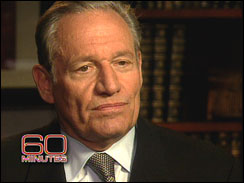
Photo from CBS News/60 Minutes

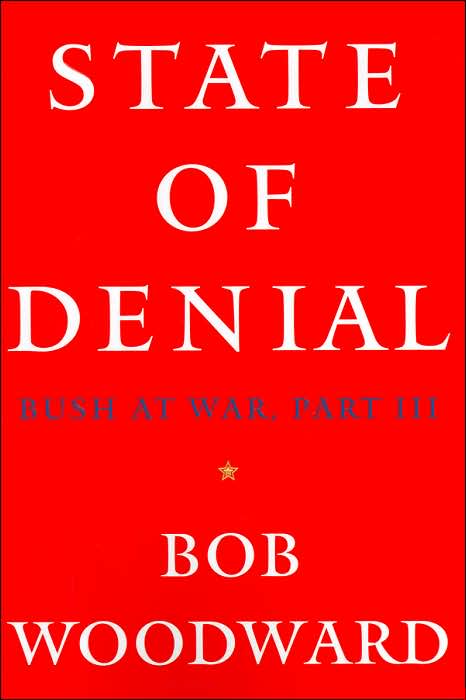
It’s that time of year again in Washington… not election season, but the release of Bob Woodward’s next book. Last time around, he broke the story of George “Slam Dunk” Tenet’s case for WMD in Iraq, among other things.

I’m not one to judge a book by its cover, but the title doesn’t sound too flattering to the Bush Administration.

Woodward taped an interview with Mike Wallace that will run on 60 Minutes this Sunday night. Here’s the teaser from CBS News:

According to Woodward, insurgent attacks against coalition troops occur, on average, every 15 minutes, a shocking fact the administration has kept secret. “It’s getting to the point now where there are eight-, nine-hundred attacks a week. That’s more than 100 a day. That is four an hour attacking our forces,” says Woodward.

The situation is getting much worse, says Woodward, despite what the White House and the Pentagon are saying in public. “The truth is that the assessment by intelligence experts is that next year, 2007, is going to get worse and, in public, you have the president and you have the Pentagon [saying], ‘Oh, no, things are going to get better,'” he tells Wallace. “Now there’s public, and then there’s private. But what did they do with the private? They stamp it secret. No one is supposed to know,” says Woodward.

“The insurgents know what they are doing. They know the level of violence and how effective they are. Who doesn’t know? The American public,” Woodward tells Wallace.

Woodward also reports that the president and vice president often meet with Henry Kissinger, who was President Richard Nixon’s secretary of state, as an adviser. Says Woodward, “Now what’s Kissinger’s advice? In Iraq, he declared very simply, ‘Victory is the only meaningful exit strategy.'” Woodward adds. “This is so fascinating. Kissinger’s fighting the Vietnam War again because, in his view, the problem in Vietnam was we lost our will.”

President Bush is absolutely certain that he has the U.S. and Iraq on the right course, says Woodward. So certain is the president on this matter, Woodward says, that when Mr. Bush had key Republicans to the White House to discuss Iraq, he told them, “I will not withdraw, even if Laura and Barney are the only ones supporting me.”

The book is being released one month before the election, so you can bank on political operatives who are going to read it cover to cover to pick and choose the tidbits that suit their opposition research and talking points. Whether any of Woodward’s revelations this time have an impact on the election remain to be seen. The person who got it worse last time was George Tenet. As a result of Woodward’s reporting, the phrase “slam dunk” is guaranteed to be in the first or second paragraph of his obituary.

I’ll watch 60 Minutes to see what else Woodward has up his sleeve, and I’ll pick up the book next week.

Update: The New York Times has obtained a copy of the book and written up some of the highlights.

The White House ignored an urgent warning in September 2003 from a top Iraq adviser who said that thousands of additional American troops were desperately needed to quell the insurgency there, according to a new book by Bob Woodward, the Washington Post reporter and author. The book describes a White House riven by dysfunction and division over the war.

The warning is described in “State of Denial,” scheduled for publication on Monday by Simon & Schuster. The book says President Bush’s top advisers were often at odds among themselves, and sometimes were barely on speaking terms, but shared a tendency to dismiss as too pessimistic assessments from American commanders and others about the situation in Iraq.

As late as November 2003, Mr. Bush is quoted as saying of the situation in Iraq: “I don’t want anyone in the cabinet to say it is an insurgency. I don’t think we are there yet.”

Secretary of Defense Donald H. Rumsfeld is described as disengaged from the nuts-and-bolts of occupying and reconstructing Iraq — a task that was initially supposed to be under the direction of the Pentagon — and so hostile toward Condoleezza Rice, then the national security adviser, that President Bush had to tell him to return her phone calls. The American commander for the Middle East, Gen. John P. Abizaid, is reported to have told visitors to his headquarters in Qatar in the fall of 2005 that “Rumsfeld doesn’t have any credibility anymore” to make a public case for the American strategy for victory in Iraq.

The book, bought by a reporter for The New York Times at retail price in advance of its official release, is the third that Mr. Woodward has written chronicling the inner debates in the White House after the Sept. 11 attacks, the invasion of Afghanistan, and the subsequent decision to invade Iraq. Like Mr. Woodward’s previous works, the book includes lengthy verbatim quotations from conversations and describes what senior officials are thinking at various times, without identifying the sources for the information.

Mr. Woodward writes that his book is based on “interviews with President Bush’s national security team, their deputies, and other senior and key players in the administration responsible for the military, the diplomacy, and the intelligence on Iraq.” Some of those interviewed, including Mr. Rumsfeld, are identified by name, but neither Mr. Bush nor Vice President Dick Cheney agreed to be interviewed, the book says.

The book describes a deep fissure between Colin L. Powell, Mr. Bush’s first secretary of state, and Mr. Rumsfeld: When Mr. Powell was eased out after the 2004 elections, he told Andrew H. Card Jr., the White House chief of staff, that “if I go, Don should go,” referring to Mr. Rumsfeld.

Mr. Card then made a concerted effort to oust Mr. Rumsfeld at the end of 2005, according to the book, but was overruled by President Bush, who feared that it would disrupt the coming Iraqi elections and operations at the Pentagon.

Vice President Cheney is described as a man so determined to find proof that his claim about weapons of mass destruction in Iraq was accurate that, in the summer of 2003, his aides were calling the chief weapons inspector, David Kay, with specific satellite coordinates as the sites of possible caches. None resulted in any finds.

The 537-page book describes tensions among senior officials from the very beginning of the administration. Mr. Woodward writes that in the weeks before the Sept. 11 attacks, Mr. Tenet believed that Mr. Rumsfeld was impeding the effort to develop a coherent strategy to capture or kill Osama bin Laden. Mr. Rumsfeld questioned the electronic signals from terrorism suspects that the National Security Agency had been intercepting, wondering whether they might be part of an elaborate deception plan by Al Qaeda.

On July 10, 2001, the book says, Mr. Tenet and his counterterrorism chief, J. Cofer Black, met with Ms. Rice at the White House to impress upon her the seriousness of the intelligence the agency was collecting about an impending attack. But both men came away from the meeting feeling that Ms. Rice had not taken the warnings seriously.

In the weeks before the Iraq war began, President Bush’s parents did not share his confidence that the invasion of Iraq was the right step, the book recounts. Mr. Woodward writes about a private exchange in January 2003 between Mr. Bush’s mother, Barbara Bush, the former first lady, and David L. Boren, a former chairman of the Senate Intelligence Committee and a Bush family friend.

The book says Mrs. Bush asked Mr. Boren whether it was right to be worried about a possible invasion of Iraq, and then to have confided that the president’s father, former President George H. W. Bush, “is certainly worried and is losing sleep over it; he’s up at night worried.”

Mr. Rumsfeld reached into political matters at the periphery of his responsibilities, according to the book. At one point, Mr. Bush traveled to Ohio, where the Abrams battle tank was manufactured. Mr. Rumsfeld phoned Mr. Card to complain that Mr. Bush should not have made the visit because Mr. Rumsfeld thought the heavy tank was incompatible with his vision of a light and fast military of the future. Mr. Woodward wrote that Mr. Card believed that Mr. Rumsfeld was “out of control.”

The fruitless search for unconventional weapons caused tension between Vice President Cheney’s office, the C.I.A. and officials in Iraq. Mr. Woodward wrote that Mr. Kay, the chief weapons inspector in Iraq, e-mailed top C.I.A. officials directly in the summer of 2003 with his most important early findings.

At one point, when Mr. Kay warned that it was possible the Iraqis might have had the capability to make such weapons but did not actually produce them, waiting instead until they were needed, the book says he was told by John McLaughlin, the C.I.A.’s deputy director: “Don’t tell anyone this. This could be upsetting. Be very careful. We can’t let this out until we’re sure.”

Mr. Cheney was involved in the details of the hunt for illicit weapons, the book says. One night, Mr. Woodward wrote, Mr. Kay was awakened at 3 a.m. by an aide who told him Mr. Cheney’s office was on the phone. It says Mr. Kay was told that Mr. Cheney wanted to make sure he had read a highly classified communications intercept picked up from Syria indicating a possible location for chemical weapons.

Interesting but not surprising that Bush and Cheney did not agree to be interviewed for this book. My guess is that when they heard about the stuff Woodward had uncovered, they decided to cut him off.

Does Webb Have a Race Problem?

Posted: September 28, 2006 in 2006 Elections

From today’s Washington Post:

Webb described taking drives through the black neighborhood of Watts, where he and members of his ROTC unit used racial epithets and pointed fake guns at blacks to scare them.

“They would hop into their cars, and would go down to Watts with these buddies of his,” Cragg said Webb told him. “They would take the rifles down there. They would call then [epithets], point the rifles at them, pull the triggers and then drive off laughing. One night, some guys caught them and beat . . . them. And that was the end of that.”

Cragg said Webb told him the Watts story during a 1983 interview for a Vietnam veterans magazine. Cragg, who described himself as a Republican who would vote for Allen, did not include the story in his article. He provided a transcript of the interview, but the transcript does not contain the ROTC story. He said he still remembers the exchange vividly more than 20 years later.

As a journalist I would be derelict if I did not write down detailed notes or a complete transcript of any interview, particularly if it were an explosive allegation such as the one Cragg is now saying Webb told him but he didn’t include in his story.

Unless more people come forward and corroborate Cragg’s claims (note the use of the word they when Cragg tells the story, implying that several people were involved in this) this will not be a big issue for Jim Webb as it is with George Allen. I should also note that a big part of Allen’s problems were caused because his reactions or remarks were caught on tape. However, until Webb issues a more forceful denial about this (read the rest of the Post story), he will appear to be ducking the issue.

Uh Oh…

Posted: September 27, 2006 in 2006 Elections, October Surprise

A couple of days ago, I mentioned the explosive allegation first reported by Salon.com that Senator George Allen (R-Virginia) stuffed a severed deer’s head in the mailbox of a house in an African American neighborhood. Again, I will note in fairness to Allen that he denied the allegations during an interview he gave to the Associated Press.

Looks like the alleged Godfather stunt is now being checked in the historical archives:

I spoke to a deputy in the Louisa County Sheriff’s Office late yesterday afternoon. They are looking though old records for any report of a deer’s head stuffed into a black family’s mailbox. This is an active investigation again- I have the cell phone number of deputy working on the case.

More bad news for Senator Allen on the same allegation – the New Republic’s Ryan Lizza has found a second, on the record source who heard about the incident from one of the men who was there when it happened.

A former college classmate of George Allen and Ken Shelton, the North Carolina radiologist who says Allen regularly used the N-word in the 1970s and once stuck the head of a deer in the mailbox of a black family, has come forward to corroborate one of Shelton’s accusations.

“I’m not out to get George Allen,” says George Beam, a 53 year-old technical manager in the nuclear industry, who lives in Forest, Virginia and who spoke to The New Republic this morning. “I just think Kenny Shelton is a fine, upstanding person, and I know he is telling the truth.”

Beam was roommates with Billy Lanahan, now deceased, who along with Allen and Shelton, was the third member of the now infamous hunting party. According to Beam, Lanahan later told him the bizarre story of the three men stuffing the deer head into a mailbox. He says Lanahan did not tell him that the prank had any racial overtones.

“Some time drinking a beer at U Heights,” Beam says, referring to the campus housing complex where Beam, Lanahan, and Allen all lived, “Lanahan told me they went hunting and killed a deer. All I know is they cut off a deer head and stuck it in someone’s mailbox. … He didn’t say it was racial — just said they stuck it in a mailbox as a prank.”

For Allen’s sake, I hope this winds up being a wild goose chase, because if it is confirmed that this incident did happen, 1) his credibility will be shot, and 2) his political career will be over.

Drip, drip, drip…

The New York Times has another person on the record who remembers Senator George Allen (R-Virginia) making racist comments, this time in the early 1980’s. This person is independent of the three former football teammates who spoke with Salon.com.

Separately, Professor Larry Sabato of UVA, who was a classmate of Allen’s at UVA in the 70’s and is considered one of the most renown political scientists and observers in the country, told Chris Matthews that he didn’t believe Allen’s denials.

The key part of the interview:

MATTHEWS: What about the charges that he actually used bad language that some of us are familiar with in this country, in fact most Americans are, the bad language about people from another background?
SABATO: Well, I can’t say how frequently he did it, but I don’t believe him when he denies ever having done it. [Matthews begins talking over him] That is just not true.
MATTHEWS: That in this country, for that generation, is a very hard test. The accusation here I believe is that he was distinctive in what is being called racial hatred, that he regularly used an awful word, the N-word, with some sort of attitude. Is that true?
SABATO: Well, I’m simply going to say that I’m going to stay with I know is the case, and the fact is that he did use the N-word, whether he’s denying it now or not. He did use it. It was the 70’s, you’re right, it was a harsh term. It was an obscenity as far as I’m concerned.

MATTHEWS: But you say he used the N-word?
SABATO: That is correct.

Whether this is based on direct first-hand insight or rumors and hearsay from the time, Sabato’s words probably carry more weight on this race and Senator Allen than most people because of his longstanding ties to the state and his understanding of Virginia and national politics.

Now, in fairness to Allen, only three of his former teammates have said he used racist language, and the graduate student who talked to the New York Times. He also denied the allegations in the Salon.com article in an interview with the Associated Press:

“The story and his comments and assertions in there are completely false,” Allen said during an interview with AP reporters and editors. “I don’t remember ever using that word and it is absolutely false that that was ever part of my vocabulary.”

The bottom line: it is now a media open season on George Allen’s past comments or views on race. If there is any truth to this or any more people who come forward to the news media on the record, Allen will be in very serious trouble with about 5 weeks to go before Election Day.

Drip, drip, drip…

The New York Times has another person on the record who remembers Senator George Allen (R-Virginia) making racist comments, this time in the early 1980’s. This person is independent of the three former football teammates who spoke with Salon.com.

Separately, Professor Larry Sabato of UVA, who was a classmate of Allen’s at UVA in the 70’s and is considered one of the most renown political scientists and observers in the country, told Chris Matthews that he didn’t believe Allen’s denials.

The key part of the interview:

MATTHEWS: What about the charges that he actually used bad language that some of us are familiar with in this country, in fact most Americans are, the bad language about people from another background?
SABATO: Well, I can’t say how frequently he did it, but I don’t believe him when he denies ever having done it. [Matthews begins talking over him] That is just not true.
MATTHEWS: That in this country, for that generation, is a very hard test. The accusation here I believe is that he was distinctive in what is being called racial hatred, that he regularly used an awful word, the N-word, with some sort of attitude. Is that true?
SABATO: Well, I’m simply going to say that I’m going to stay with I know is the case, and the fact is that he did use the N-word, whether he’s denying it now or not. He did use it. It was the 70’s, you’re right, it was a harsh term. It was an obscenity as far as I’m concerned.

MATTHEWS: But you say he used the N-word?
SABATO: That is correct.

Whether this is based on direct first-hand insight or rumors and hearsay from the time, Sabato’s words probably carry more weight on this race and Senator Allen than most people because of his longstanding ties to the state and his understanding of Virginia and national politics.

Now, in fairness to Allen, only three of his former teammates have said he used racist language, and the graduate student who talked to the New York Times. He also denied the allegations in the Salon.com article in an interview with the Associated Press:

“The story and his comments and assertions in there are completely false,” Allen said during an interview with AP reporters and editors. “I don’t remember ever using that word and it is absolutely false that that was ever part of my vocabulary.”

The bottom line: it is now a media open season on George Allen’s past comments or views on race. If there is any truth to this or any more people who come forward to the news media on the record, Allen will be in very serious trouble with about 5 weeks to go before Election Day.