Archive for the ‘International’ Category

Two key al-Qaeda operatives in Yemen bit the dust today

U.S.-Born Qaeda Leader Killed in Yemen

SANA, Yemen — Anwar al-Awlaki, the radical American-born cleric who was a leading figure in Al Qaeda’s Yemen affiliate and was considered its most dangerous English-speaking propagandist and plotter, was killed in an American drone strike on his vehicle on Friday, officials in Washington and Yemen said. They said the strike also killed a radical American colleague who was an editor of Al Qaeda’s online jihadist magazine.

Many details of the strike were unclear, but one American official said that Mr. Awlaki, whom the United States had been hunting in Yemen for more than two years, had been identified as the target in advance and was killed with a Hellfire missile fired from a drone operated by the Central Intelligence Agency. The official said it was the first C.I.A. strike in Yemen since 2002. Yemen’s Defense Ministry confirmed Mr. Awlaki’s death.

The strike appeared to be the first time in the American-led war on terrorism since the Sept. 11, 2001, attacks that an American citizen had been deliberately killed by American forces, a step that has raised contentious constitutional issues in the United States. It was also the second high-profile killing of an Al Qaeda leader in the past five months under the Obama administration, which ordered the American commando raid that killed Osama bin Laden in Pakistan in May.

Mr. Awlaki was an important member of Al Qaeda in the Arabian Peninsula, regarded by some antiterrorism experts as the most dangerous branch of the Al Qaeda network. He was considered the inspirational or operational force behind a number of major plots aimed at killing Americans in the United States in recent years, most notably the deadly assault at an American army base in Fort Hood, Tex., and attempts to bomb Times Square and a Detroit-bound jetliner.

Yemen’s official news agency, Saba, reported that the attack also killed Samir Khan, an American citizen of Pakistani origin who was an editor of Inspire, Al Qaeda’s English-language Internet magazine. An American official said the United States government believed Mr. Khan had been killed as well. It was not clear whether Mr. Khan, who proclaimed in the magazine last year that he was “proud to be a traitor to America,” was also a deliberate target of the strike.

A Yemeni Defense Ministry statement said that a number of Mr. Awlaki’s bodyguards were also killed.

Neither the Americans nor the Yemenis explained precisely how they knew that Mr. Awlaki had been confirmed dead.

This operation raises interesting constitutional questions about whether or not the federal government has the right to order the assassination of American citizens. Given Yemen’s teetering status as a quasi-failed state and the lack of effective government institutions in the country, expecting local authorities to arrest Awlaki or Khan or extradite them to the United States for trial was simply not a viable option.

ABC’s Jake Tapper recaps the high-level terrorist leaders who have been captured or killed during Obama’s presidency… He’s racked up quite the body count.

For laughs, the Drunk Predator Drone has weighed in on the assassination via Twitter.

Full disclosure: I once e-mailed Anwar al-Awlaki through his now-defunct website/blog for comment on a story about Fort Hood shooting suspect Nidal al Hassan I was working on for CNN back in 2009. I never got a response.

There’s a good article in The Atlantic about the proliferation of North Korean state-run restaurants popping up in East Asia. Here’s an excerpt:

Among the city’s growing cohort of Korean restaurants, Pyongyang Café has an unusual claim to fame. It is run by the North Korean government, part of a far-flung chain of restaurants that funnels much-needed foreign exchange to the ailing regime in Pyongyang. Andrey Kalachinsky, a veteran journalist and local analyst, said that in the Soviet era, when Vladivostok was a closed military city, the Pyongyang Café was the only foreign eatery in town — a symbol of the political and economic ties between the Soviet Union and Marshal Kim Il-Sung’s Democratic People’s Republic of Korea.

At the Vladivostok restaurant, there is little to suggest any connection with the regime just 428 miles distant. No pictures of the Kim Il-Sung grace the walls, no slogans stamped out in shrill red Korean script. Instead, the décor excels in a sort of kitschy chinoiserie: the walls of one room are covered with naturalistic motifs — golden autumn leaves and towering cliffs — complete with a fake tree that “emerges” from the painted-on scene. Overlooking my booth was a framed poster of a woman looking out coyly from behind a large fan, the Chinese character for “double happiness” inscribed on every second blade.

The whole thing is worth a read, but I can tell you the description I quoted in the previous graphs is accurate. I went to one of these restaurants in Dandong, China back in 2007. We had a private room with a karaoke machine and a view of on the Yalu River. We had waitresses who brought our food and they serenaded us with a North Korean song. Unfortunately, none of the people in my group spoke Korean so we had no idea what the song was about – whether it was a WPK song or something else entirely.

In a bit of cultural diplomacy, we decided to reciprocate and sing a song for them. While deciding which song to pick from the karaoke machine, I looked out the window and saw the Yalu River Bridge, which connects China to North Korea. The bridges were repeatedly bombed by the United States during the Korean War, and one of them – now dubbed the Broken Bridge – was left intact in its bombed out state, and remains so to this day. In that moment, I suggested – with a completely straight face – that we sing Simon and Garfunkel’s “Bridge Over Troubled Water.” Much to my surprise, two vocally talented members of my group actually did it. I don’t think the waitresses got the joke, though.

Here are a few other details I recall from that trip that weren’t mentioned in the Atlantic article. Our guide told us that the restaurant staff were believed to be the children of high-level party officials in Pyongyang. They undergo extensive job training in Pyongyang – including waiting tables and Mandarin proficiency – before being sent over to mainland China to work at a restaurant. The other detail he told us was the rumored existence of a collective punishment policy to deter defections. If one waiter or waitress defects while in China, the other members of his or her training class are recalled back to North Korea, presumably to be punishment. While a job waiting tables in the United States isn’t considered that big of a deal, for the waiters and waitresses working at these restaurants our guide told us, it is a big deal because they are among the elite few chosen to represent their country abroad.

Cyberwar people are gonna love this

MI6 attacks al-Qaeda in ‘Operation Cupcake’
British intelligence has hacked into an al-Qaeda online magazine and replaced bomb-making instructions with a recipe for cupcakes.

The cyber-warfare operation was launched by MI6 and GCHQ in an attempt to disrupt efforts by al-Qaeda in the Arabian Peninsular to recruit “lone-wolf” terrorists with a new English-language magazine, the Daily Telegraph understands.

When followers tried to download the 67-page colour magazine, instead of instructions about how to “Make a bomb in the Kitchen of your Mom” by “The AQ Chef” they were greeted with garbled computer code.

The code, which had been inserted into the original magazine by the British intelligence hackers, was actually a web page of recipes for “The Best Cupcakes in America” published by the Ellen DeGeneres chat show.


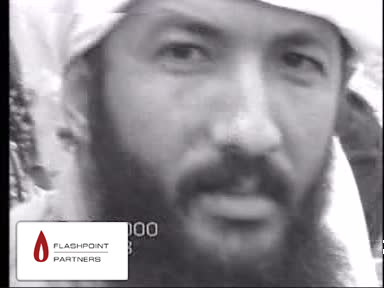
Al Qaeda leader Saif al-Adel at an al Qaeda training camp in Afghanistan, January 2000

Source: Flashpoint Partners/Evan Kohlmann

Multiple news organizations are reporting that Saif al-Adel, a former Egyptian special forces officer with years of operational experience in al Qaeda, has been named acting leader of the organization in the aftermath of Osama bin Laden’s death. The choice of al-Adel, and the unclear status of Ayman al-Zawahiri, offer some insights into the current state of the organization and the challenges it faces in a post-bin Laden world.

The key takeaways for me are first, that the Egyptians still have a considerable degree of influence within the organization during a period of disarray. It is worth keeping in mind that bin Laden’s longtime deputy Ayman al-Zawahiri is also Egyptian, and a good part of al Qaeda’s early membership came from al-Zawahiri’s Egyptian Islamic Jihad group. The two organizations formally merged in June of 2001.

Second, while this may be a short-term solution for them, the fact is no one will be able to fill bin Laden’s very large shoes as a leader and public figure. There are questions within the organization about the political viability of al-Zawahiri, his presumed successor. Fawaz Gerges, a professor of Middle Eastern studies at the London School of Economics, told the Washington Post, “There is no one else who has his weight or intellect. He is a giant among the remaining figures in al-Qaeda. But there is no doubt Ayman al-Zawahiri has been a divisive figure.”

Third, while bin Laden can still inspire them posthumously and serve as a propaganda figure, the key question now will be whether al-Adel, al-Zawahiri or someone else can hold all of these different organizations together under the al Qaeda umbrella or if some will split off and focus their energies on their regional political and sectarian issues. Secession by some of the local franchises or affiliates from the main al Qaeda organization should be considered as a real possibility in the weeks and months ahead, especially if internal political disagreements can’t be sorted out.

Fourth, as Peter Bergen points out, al-Adel and al-Zawahiri are going to have to deal with the fallout of the massive intelligence breach to the organization. They have to assume that the organization’s most sensitive secrets have been compromised or eventually will be as U.S. intelligence officials go through the treasure trove of information recovered during the bin Laden operation. This may force them into several courses of action, including – but not limited to – jumping the gun on operations before they are fully ready to be carried out, or aborting planned operations because the operational security and secrecy of the plan might be compromised.

The death of bin Laden doesn’t automatically mean the death of the organization he created or the ideology he inspired. Georgetown’s Security Studies Program director Bruce Hoffman points out historical examples where the decapitation of terrorist organizations have not meant the end of the campaigns. [Full disclosure: I am currently a graduate student in the SSP, although not in any of Hoffman’s classes.] But bin Laden’s successors will clearly have their work cut out for them in keeping the organization as a viable force to attack the United States and its allies.

Al Qaeda’s biggest problem may be in the inherent nature of the organization itself – it has no political means of achieving its objectives, only by means of asymmetric warfare. Simply put, al Qaeda can only exist and function as a terrorist organization. As my former professor Paul Pillar said, it has no equivalent of Sinn Fein to pursue a political agenda and won’t sit down at a negotiating table with domestic or international leaders. It can’t be held accountable for delivering results by a political base of constituents, as Hezbollah or Hamas are. After the revolutions of the Arab Spring which forced regime changes or political reforms, al Qaeda and its ilk may simply be less appealing to people as an option when they see political objectives can be achieved by other means.

The worst thing that could happen to al Qaeda or any group like it is to become irrelevant, and that is precisely what al-Adel and al-Zawahiri have to deal with right now if they want the organization as it existed before bin Laden’s death to survive.

Update: On a related note, check out this article in the Atlantic Wire.

What does a guy cooped up in a house for five years with multiple wives do to pass the time? Apparently, he (or someone else living in the compound) had a porno collection:

(Reuters) – A stash of pornography was found in the hideout of Osama bin Laden by the U.S. commandos who killed him, current and former U.S. officials said on Friday.

The pornography recovered in bin Laden’s compound in Abbottabad, Pakistan, consists of modern, electronically recorded video and is fairly extensive, according to the officials, who discussed the discovery with Reuters on condition of anonymity.

The officials said they were not yet sure precisely where in the compound the pornography was discovered or who had been viewing it. Specifically, the officials said they did not know if bin Laden himself had acquired or viewed the materials.

Even though no one knows whose material this was, or if bin Laden himself ever viewed it, U.S. officials have been brutally effective at chipping away at bin Laden’s carefully constructed image of a pious man risking it all for the cause. In the 12 days since the raid, we’ve found out that he was caught flat-footed by U.S. Navy SEALs, was obsessed with his self-image in the media, and now we discover this. It’s a good PR/public diplomacy pushback at bringing down bin Laden’s mystique and showing him for who and what he really was.

Not to mention that this discovery is going to be fodder for every late night comedian in the world. Even the press is having fun with this. As Politico reporter Josh Gerstein put it: “Readying my #FOIA for bin Laden’s porn. Fear JWatch will beat me to it. May require ProPublica or NYT to delve into it”

For those of you who are interested in the financial angle of terrorism, national security, and organized crime as I am, check out this article that ran in Foreign Policy yesterday.

Good find from the Guardian:

When the Taliban ruled Afghanistan, they eschewed most modern technology, including television and music players.

But in the latest sign of the hardline movement’s rapprochement with at least some areas of the modern world, the Taliban have embraced microblogging.

Their Twitter feed, @alemarahweb, pumps out several messages each day, keeping 224 followers up to date with often highly exaggerated reports of strikes against the “infidel forces” and the “Karzai puppet regime”.

Most messages by the increasingly media-savvy movement are in Pashtu, with links to news stories on the elaborate and multilingual website of the Islamic Emirate of Afghanistan, as the Taliban’s shadow government likes to style itself.

On Thursday, the feed broke into English for the first time, with a tweet about an attack on police in Farah province. “Enemy attacked in Khak-e-Safid, 6 dead,” read the message.

There is not much lively banter between the “emirate” and its Twitter followers, save for a cheerful “asalam alekum” sent last week to the Kavkaz Centre, a militant news site covering jihad in the Caucasus.

Don’t be surprised if military and intelligence officials are now trying to figure out how to get them to use foursquare

Sen. James Inhofe (R-Oklahoma) has looked at the photos of Osama bin Laden’s body and has described them on the record.  Based on his account, it seems like pretty gruesome stuff:

In an interview with The Atlantic Wire after he returned from the CIA headquarters, Inhofe described the photos he saw. He said he was shown 15 photos. A dozen of those were taken at the Abbottabad compound and appear to be “taken right after the instant he was shot.” They sound gruesome. They show a massive head wound in the ear and eye. “The brains were coming out of his socket,” Inhofe said. But he said three other photos were taken on board the ship before bin Laden’s sea burial. In these, the body has been cleaned up and Inhofe, who has advocated releasing the photos, said, “It’s much more reasonable to show the public these photos.”

After being kept in the dark about the Bin Laden operation until after it was over, Pakistani government officials have complained that they should have been involved or informed. The ISI – Pakistan’s intelligence agency – has been especially embarrassed by this entire episode, considering that they should have known Bin Laden was living in hiding on their soil for at least five years.

Then again, if this is the ISI’s idea of operational security and secrecy regarding a high-value target, the administration won’t have too much difficulty justifying its decision to keep Islamabad out of the loop:

Pakistan’s military intelligence organisation has confirmed that the leader of the Taliban group is hiding in the west of Pakistan’s Quetta city, reports say.

A senior Pakistani intelligence official has said the Inter-Services Intelligence Agency (ISI) will step up a huge operation to detain or kill the Taliban leader Mullah Omar.

Meanwhile, Afghanistan’s Foreign Minister during his visit to China said the death of Osama Bin Laden in Pakistan could end up helpful to Afghan peace process.

After the death of Osama Bin Laden in the garrison town of Abbottabad, the country’s military intelligence agency has been planning to detain or kill the Taliban leader.

Some reports suggest the ISI has already launched a hunt-down operation in Quetta city of Pakistan.

Regardless of accuracy, imagine if this story had been about Bin Laden rather than Omar. U.S. government officials would be howling about it for weeks.

A couple of my friends/Georgetown classmates had good articles published recently I thought I should share here.

From Phillip Padilla (sharing a byline with my former professor Daniel Byman), this article published in Slate about how the Bin Laden operation could have gone wrong.

From Adam Elkus, who blogs over at Rethinking Security, this article about military raiding published in The Atlantic.

Both are well worth taking the time to read.