Archive for the ‘John McCain’ Category

Obama picks up a trifecta of GOP endorsements in the aftermath of getting the Colin Powell seal of approval:

Former White House Press Secretary Scott McClellan

Former governor of Massachusetts William Weld
Former governor of Minnesota Arne Carlson

The only big name Democrat to endorse McCain so far is Joe Lieberman. What makes him more significant than any of the Republicans who crossed over for Obama is that he is still a serving U.S. senator, currently a member of the Democratic caucus. If McCain wins the White House, there is speculation that McCain would ask Lieberman to serve in his cabinet – possibly as Secretary of Defense or State – which would open up his seat in the Senate, which would be filled at the discretion of the Republican governor of Connecticut Jodi Rell.


Interesting find from the New York Times.

Ken Vogel has this interesting story on what records or other relevant information the four major candidates (McCain, Obama, Palin and Biden) are not releasing to the public.

Politico has a story about the ongoing bickering in and out of the McCain campaign. They point out that it is rare for campaign aides to be doing this before an election, citing the Draper article as an example. For all of the McCain campaign’s public bluster and posturing of being competitive, the unguarded honest assessments cloaked by a journalistic agreement of anonymity are always much more telling.

“The cake is baked.  We’re entering the finger-pointing and positioning-for-history part of the campaign. It’s every man for himself now.”
Unidentified former McCain strategist

After re-reading Robert Draper’s in-depth narrative of the behind-the-scenes drama of the McCain campaign, the biggest thing I took away from it was how Steve Schmidt was at or near the center of nearly every major tactical and strategic decision of the campaign – good or bad – during the last few months.

The biggest example of this, and arguably McCain’s biggest blunder, was Schmidt’s idea for McCain to suspend his campaign and go back to Washington to work on the negotiations for the bailout package. Mark Salter and Rick Davis are in there as part of the senior decision-making team too, but largely in supporting roles. Schmidt is the main character in the story. But between the three of them, my general assessment is that John McCain was the victim of political malpractice. He got bad advice repeatedly and his campaign suffered for it, and continues to do so.

There are moments of surprising candor in Draper’s exchanges with his sources, naturally on a not-for-attribution basis for the most part. The best reporting comes from Draper’s meticulous reconstruction of the cloak and dagger operation involved in getting Sarah Palin from Alaska to Arizona and then Ohio while keeping it under wraps from the press and most of the campaign staff. The other surprising thing about the Palin pick was just how in the dark many McCain aides were until the last minute. Draper does not talk much about the vetting process, but based on how he described the interviews with Palin, it seems that it was very much a last-minute decision hastily put together.

But the biggest contribution of Draper’s story is that it offers an accurate assessment of the McCain campaign’s central problem, especially in comparison to the Obama campaign: the inability to find and stick to a single theme or message to sell voters on their candidate. As circumstances changed, so did the McCain campaign’s message – 6 times by Draper’s count. It is essentially a post-mortem on a campaign that is still alive. Yes it’s premature to speak of the McCain campaign in the past tense when theoretically they could still win on Election Day, but as a quasi-contemporary picture of the campaign, I think its analysis and reporting is accurate.

This is probably a good sneak preview of the inevitable McCain campaign insider tell all books that will be published after the election.
Chuck Todd is one of the most influential political observers and commentators in Washington.  When he says something, people listen.  This is not what the McCain people want the chattering class in the media to be talking about less than two weeks before the election.

Commenting on a new joint interview with John McCain and Sarah Palin, NBC News Political Director Chuck Todd described the Republican ticket as lacking cohesion, chemistry, and (he hinted) trust.

“There was a tenseness,” Todd told MSNBC’s Chris Matthews. “I couldn’t see chemistry between John McCain and Sarah Palin. I felt as if we grabbed two people and said ‘here, sit next to each other, we are going to conduct an interview.’ They are not comfortable with each other yet.”

Todd, who was remarking on the interview conducted by NBC’s Brian Williams (he was in the room), speculated that the candidates had come to the realization that “they are losing” the campaign, and guessed that McCain may have begun to hold his vice presidential choice responsible for his dwindling White House chances.

The article is up on the NYT website. Highlights and analysis shortly…

Update:

The Highlights
– Steve Schmidt was the one who pushed McCain to go “all in” on the bailout and suspend his campaign to go to Washington to get in on the negotiations and then take the credit when a solution was reached.
– The Mark Salter/Rick Davis relationship was on the rocks at one point, which is what allowed Schmidt to take a bigger role in the campaign.
– The idea of McCain doing a campaign tour of the towns where he grew up came from Karl Rove.
– The idea for McCain’s much-panned green backdrop came from Schmidt, which Draper calls “a poorly executed version of an idea Schmidt borrowed from the eco-friendly 2006 Schwarzenegger campaign.”
– The senior strategists held a conference call on June 24 – less than five months away from the election – because (citing an unidentified participant) “we still couldn’t answer the question, ‘Why elect John McCain?'”
– Schmidt during a campaign strategy meeting on July 27 after Barack Obama’s tour of the Middle East and Europe:“Would anyone here disagree with the premise that we are not winning this campaign?”
“Would anyone disagree with the premise that Mr. Obama has scored the most successful week in this entire campaign? I mean, they treated him like he was a head of state! So tell me, gentlemen: how do we turn this negative into a positive?”
– Schmidt came up with the Obama-as-celebrity attack during that same meeting.
– Names on McCain’s VP shortlist on August 24: Tim Pawlenty, Tom Ridge, Joe Lieberman, Mitt Romney, Michael Bloomberg, and Charlie Crist.
– Schmidt was the one who first publicly floated the idea of Sarah Palin as McCain’s running mate at the same meeting, although he had been discussing the idea privately with Rick Davis beforehand.
– Lindsey Graham was lobbying for a McCain-Lieberman ticket.
– McCain floated the idea of Romney as his running mate, noting his help in fundraising and that he would put Michigan in play.
– Palin did not come up during internal discussions with aides, although Pawlenty and Bloomberg did.
– Draper’s account of the clandestine operation by which McCain aides went to Alaska and flew Palin and her family to Arizona and later to Ohio is excellent.
– Salter was a big fan of Pawlenty as VP, Romney… not so much. A senior aide says he was likely surprised by the Palin choice.
– Palin speechwriter Matthew Scully got a standing ovation at a bar after Palin’s acceptance speech at the Republican convention.
– Schmidt after Palin’s speech: “Arguably, at this stage? She’s a bigger celebrity than Obama.”
– Palin got lessons from voice coach Priscilla Shanks
– A very telling exchange between reporter and source after McCain’s acceptance speech.
Draper: “Leaving aside her actual experience, do you know how informed Governor Palin is about the issues of the day?”
Unidentified senior McCain adviser: “No, I don’t know.”
– Joe Biden and McCain came to an oral agreement in 2005 to do town halls together if they both won their parties’ nominations. McCain made the same offer to Obama, who was not interested.
– McCain has had a “disdain and dislike” of Obama going back to the ethics reform bill discussed in the Senate.
– Unidentified McCain adviser before the debates: “If he keeps the debates on substance, he’s very good. If it moves to the personal, then I think it’s a disaster.”
– Bad debate advice from Mark Salter, who suggested that McCain maintain “a very generous patience with Obama — in terms of, ‘I’m sure if he understood…’”
– Schmidt’s amusing response to a question about post-debate spinning from a foreign reporter: “Well, look. One of the things I always wonder is why we come in here at the end. . . . It doesn’t really matter, to be totally truthful with you. It’s just part of the ritual. Like eating turkey on Thanksgiving.”
– By Draper’s count, the McCain campaign has had 6 different narratives, and the current one is essentially a hybrid approach incorporating elements from the previous five.

The New York Times Magazine is publishing a story on Sunday chronicling the behind-the-scenes drama and the ever-changing narratives in the McCain campaign. Given that the campaign has essentially declared war on the Times at the most senior levels on multiple occasions, expect a similar response when this story runs. Politico has excerpts.

Remember how much fun Republicans had tarring and feathering John Edwards with this?

If that was fair game (I thought at the time – and still do – that it was quite silly) then Sarah Palin and the Republican National Committee just handed the Democrats a whole caseload of ammunition.

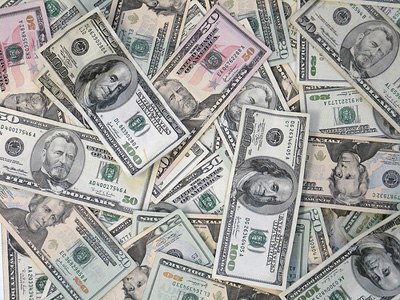
The Republican National Committee has spent more than $150,000 to clothe and accessorize vice presidential candidate Sarah Palin and her family since her surprise pick by John McCain in late August.

According to financial disclosure records, the accessorizing began in early September and included bills from Saks Fifth Avenue in St. Louis and New York for a combined $49,425.74.

The records also document a couple of big-time shopping trips to Neiman Marcus in Minneapolis, including one $75,062.63 spree in early September.

The RNC also spent $4,716.49 on hair and makeup through September after reporting no such costs in August.

The cash expenditures immediately raised questions among campaign finance experts about their legality under the Federal Election Commission’s long-standing advisory opinions on using campaign cash to purchase items for personal use.

Politico asked the McCain campaign for comment, explicitly noting the $150,000 in expenses for department store shopping and makeup consultation that were incurred immediately after Palin’s announcement. Pre-September reports do not include similar costs.

Somehow, I think a six-figure shopping spree for a personal makeover is not what Republican donors had in mind when they wrote out their checks. Expect the Democrats and the late night comedians to pounce on this.

Update: Marc Ambinder quotes Republicans, GOP donors and an RNC staffer who are disgusted with the expenditures, although not surprisingly all of them are on background.